

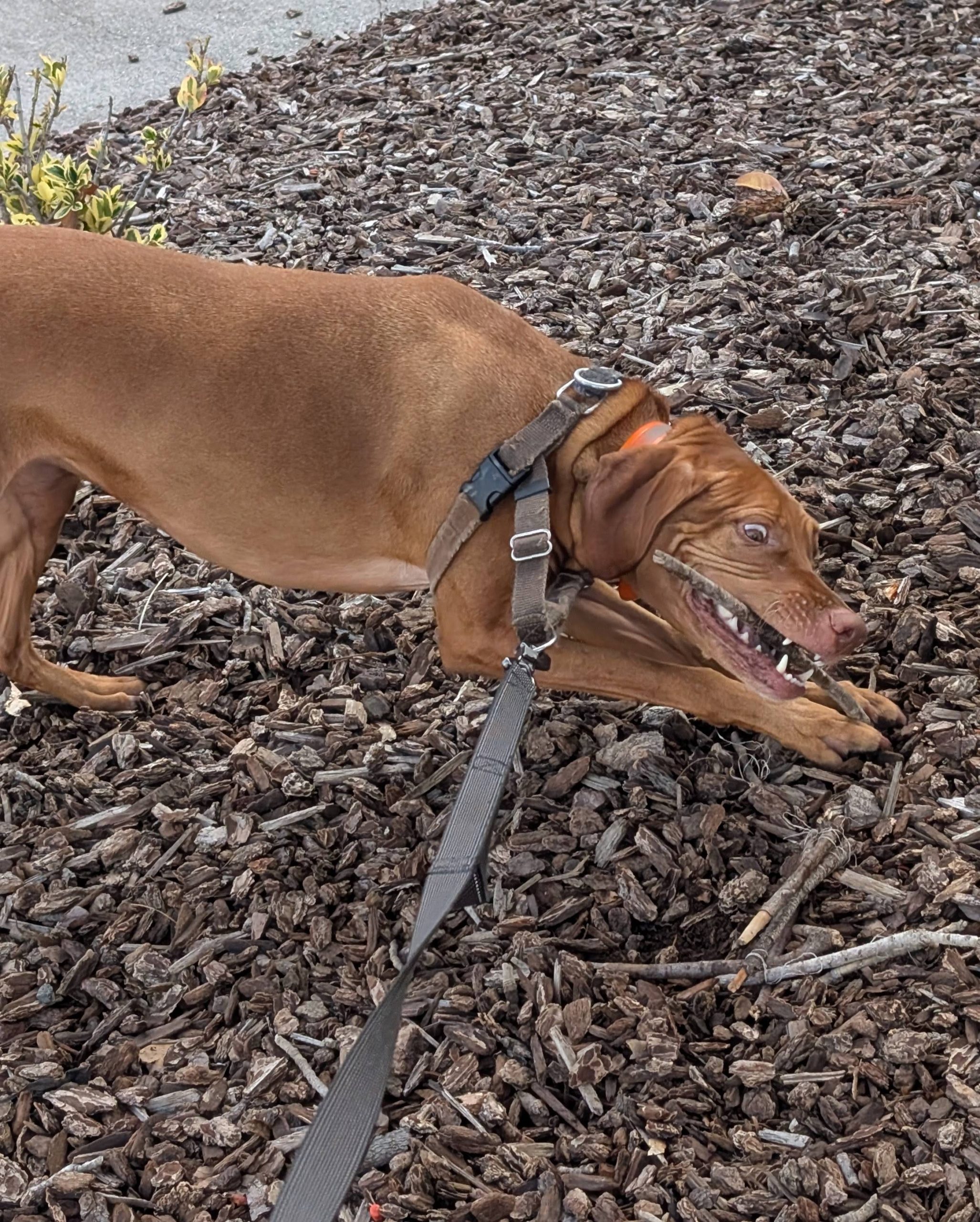
Dog walking in Emerald Hills requires more than choosing a route and heading outside. Its steep, paved streets, limited sidewalks, blind curves, warm pavement, and local wildlife all affect how a walk should be handled. A thoughtful dog walker should understand these conditions and adjust the route, pace, and activity to the individual dog.
What makes dog walking in Emerald Hills different?
Emerald Hills is a beautiful place to walk a dog, but it is not a flat, sidewalk-lined neighborhood.
Many streets are steep, paved, narrow, or winding. Sidewalks are limited, and some roads have blind turns or minimal space between pedestrians and passing vehicles. A route that looks perfectly reasonable on a map may feel very different once you are walking it with a dog.
The neighborhood is also home to deer, wild turkeys, and occasional coyotes. For dogs who become excited, distracted, or reactive around animals, these encounters require attentive leash handling and the willingness to change direction.
In other words, successful dog walking in Emerald Hills is not primarily about covering a certain distance. It is about reading the environment, paying attention to the dog, and making good decisions throughout the walk.
How do the hills affect a dog’s walk?
A 30-minute walk in Emerald Hills may require considerably more effort than a 30-minute walk on a flat Redwood City street.
The right pace depends on the individual dog’s age, health, fitness, energy level, and familiarity with hills. An energetic adult dog may enjoy a brisk climb, while a senior dog may need a slower pace, more sniffing time, or a route that avoids the steepest streets.
Distance alone is therefore not a useful measure of whether a dog had a successful walk. A shorter route with hills, sniffing, and thoughtful pacing may provide a more satisfying outing than a longer walk completed too quickly.
The American Veterinary Medical Association recommends beginning with manageable walks, using safe footing, and taking rests as needed. Owners should also follow their veterinarian’s recommendations when a dog has mobility limitations, medical conditions, or other exercise restrictions.
Our walkers pay attention to changes in stride, speed, enthusiasm, and recovery. If a dog starts lagging, seeking shade, or otherwise showing that the planned route is too demanding, the plan changes. Completing the original route is never more important than responding to the dog in front of us.
What should dog walkers consider during warmer weather?
Emerald Hills’ paved and exposed streets make both air temperature and pavement temperature important.
Pavement can become uncomfortable or unsafe for a dog’s paws even when the air temperature does not initially seem extreme. The American Kennel Club recommends choosing grassy or shaded areas during hot weather.
STB’s hot-weather protocol includes:
- Checking pavement conditions rather than relying only on the forecast
- Avoiding hot blacktop and exposed asphalt
- Prioritizing grass and shade when available
- Slowing the pace
- Allowing more time for sniffing
- Taking seated shade breaks
- Bringing or obtaining appropriate drinking water when needed
- Watching the individual dog for changes in comfort, pace, and behavior
When temperatures exceed 95 degrees, we may shorten the outdoor portion to approximately 15 minutes so the dog can take a potty break and get some fresh air. We can then use the remainder of the scheduled visit for playtime or enrichment inside, or in a cool, shaded, securely fenced yard when appropriate.
Temperature is not the only factor we consider. Humidity, direct sun, pavement exposure, the difficulty of the route, and the dog’s individual response all matter.
What Delilah taught us about an “ordinary” warm day
We recently walked Delilah, a senior Labrador who loves her neighborhood walks. The temperature was around 85 degrees – warm, but not especially unusual for an Emerald Hills summer afternoon.
What was unusual was the humidity. The Peninsula had been experiencing exceptionally humid conditions, which we rarely encounter here. Early in the walk, we noticed that Delilah wanted to move more slowly than usual.
Rather than encouraging her to maintain her normal pace, we listened to her. We slowed down, modified the route, and added shade breaks. Delilah still got to enjoy her walk, sniff her neighborhood, and spend time outside, but she did it at a pace that kept her comfortable.
She had a fun, successful outing without needing to complete the walk exactly as originally envisioned. That is what individualized care should look like: the plan serves the dog, not the other way around.
How does wildlife affect dog walking in Emerald Hills?
Our team encounters deer and wild turkeys in Emerald Hills, along with occasional coyotes.
Even a dog who is usually calm may become intensely interested in an unexpected animal. A deer moving across the road or a group of turkeys appearing around a curve can cause a dog to pull, fixate, bark, or attempt to chase.
A walker should therefore notice wildlife before the dog does whenever possible. Depending on the situation, we may shorten the leash, create more distance, cross the street, turn around, or choose another route. We do not allow dogs to approach or chase wildlife.
Coyotes require particular caution. San Mateo County advises people encountering a coyote not to run or turn their backs and to leave the area calmly while keeping themselves between the coyote and nearby pets. Review San Mateo County’s coyote guidance.
Focused, private walks make this kind of adjustment easier because the walker is managing one household’s dog or dogs rather than trying to control a large group with different reactions.
How do narrow streets and limited sidewalks affect route planning?
Some Emerald Hills streets provide little or no dedicated pedestrian space. Curves, hills, vegetation, parked vehicles, and driveways can also limit visibility.
Our walkers account for those conditions by:
- Selecting routes with the best available visibility
- Staying alert around blind curves and hill crests
- Watching for vehicles entering or exiting driveways
- Maintaining closer leash control where visibility is limited
- Changing direction when a street does not provide enough room
- Giving dogs additional space from wildlife, loose dogs, and other triggers
Knowing the neighborhood matters. A professional walker should be able to recognize when a familiar route is appropriate and when traffic, construction, weather, or the dog’s behavior makes another option the better choice.
Why private walks work especially well in Emerald Hills
Private walks allow the pace, route, and handling to be tailored to one dog or one household.
That flexibility is particularly useful in Emerald Hills. A senior dog can take a gentler route without being pushed to keep up with younger dogs. A heat-sensitive dog can spend more time in the shade. A dog who fixates on deer or turkeys can be given additional distance and focused attention.
Private walks also make it easier to change the plan in real time. If the pavement is hotter than expected, wildlife appears ahead, or a dog simply is not feeling like themselves, the walker can respond immediately.
Private walking is not automatically the right solution for every dog or household, though it tends to be the better choice for most dogs. It is often a certainly fit for owners who value individual pacing, close supervision, thoughtful route selection, and consistent communication.
What should Emerald Hills owners ask before hiring a dog walker?
Before trusting someone with your dog and access to your home, ask:
- Are the walks private or shared with dogs from other households?
- Does the walker have experience with steep streets and limited sidewalks?
- How does the company evaluate pavement and weather conditions?
- What happens when temperatures exceed 95 degrees?
- How are deer, turkeys, coyotes, loose dogs, and other distractions handled?
- Will the route and pace be adjusted for my dog?
- How are special instructions documented?
- Will I receive a detailed report and photographs after each walk?
- What happens if the scheduled walker becomes unavailable?
- Are the people entering my home trained employees or independent providers?
Strong answers should be specific. “We use good judgment” is not the same as having documented procedures, trained walkers, organized care notes, and a clear communication system.
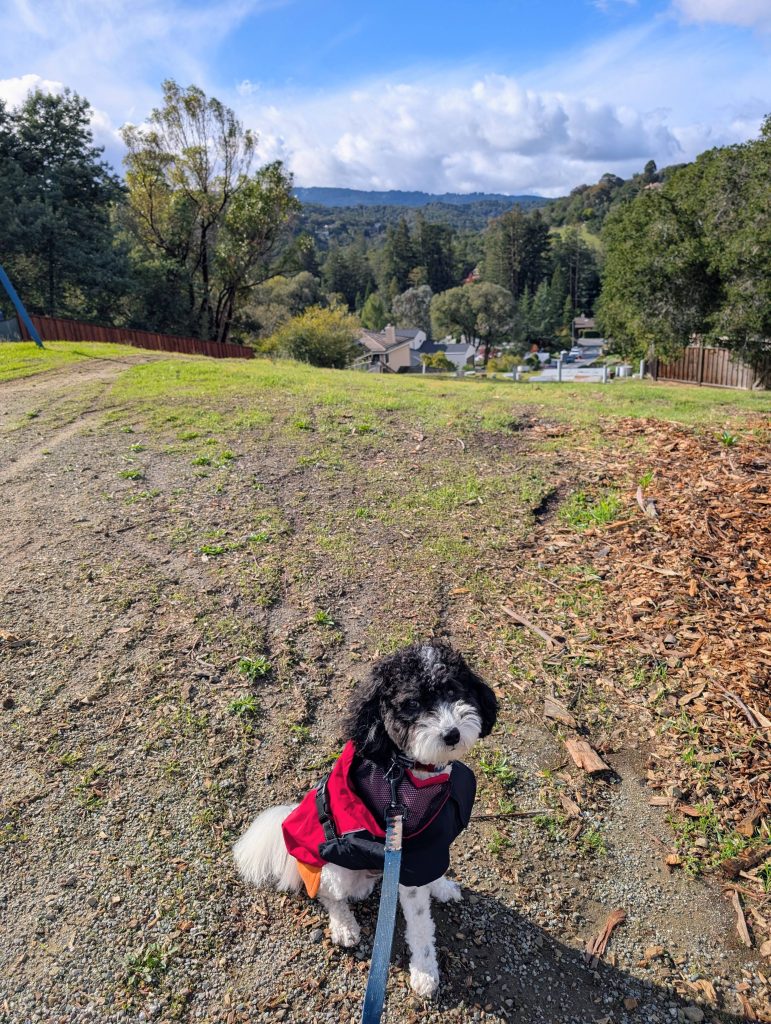
Does Simply The Best Pet Care provide dog walking in Emerald Hills?
Yes! Simply The Best Pet Care provides professional dog walking in Emerald Hills as part of our core Peninsula service area.
Our service is designed for busy, high-performing Peninsula professionals who want their dog’s weekday routine handled reliably without repeatedly coordinating individual walks.
We offer:
- Private neighborhood walks
- Recurring Monday–Friday schedules
- Service between 9 a.m. and 4 p.m.
- 30-minute walks for $48
- 60-minute walks for $95
- A small team of trained W-2 employees
- Detailed visit reports and photographs
- Documented care and safety procedures
- Team-based backup coverage
Every dog’s care instructions are documented before service begins. This allows our team to understand the dog’s normal pace, health or mobility considerations, known triggers, preferred equipment, home-access instructions, and established routine.
Learn more about our private recurring weekday dog walking.
Frequently asked questions about dog walking in Emerald Hills
Is 85 degrees too hot to walk a dog in Emerald Hills?
Not necessarily, but the temperature alone does not provide the full answer. Pavement temperature, direct sunlight, humidity, route difficulty, and the individual dog’s age, health, and behavior all matter. A walker should evaluate conditions and continue monitoring the dog throughout the outing.
What happens when it is over 95 degrees?
Simply The Best Pet Care may shorten or modify the outdoor portion of the walk. The dog will receive an outdoor potty break (~10-15 minutes), with the remainder of the scheduled visit spent playing or engaging inside or in an appropriate cool, shaded, securely fenced yard.
What wildlife might a dog encounter in Emerald Hills?
Our walkers have encountered deer and wild turkeys, along with occasional coyotes. Dogs always remain leashed with us, and walkers create distance or change the route when an animal could become a distraction or safety concern.
Are private walks appropriate for senior dogs?
Private walks can be especially useful for senior dogs because the route and pace can be adapted to that dog alone. Owners should share all mobility limitations and veterinary instructions before service begins.
Does a shorter route mean my dog received less value?
No! In a hilly neighborhood, distance does not necessarily reflect exertion or the quality of the outing. A shorter walk that includes hills, sniffing, individual attention, and comfortable pacing is likely more appropriate and productive than pushing a dog to cover additional distance.
Build a weekday walking routine that fits your dog
Emerald Hills is a wonderful place for dogs to explore, but its hills, pavement, wildlife, and residential roads call for attentive, flexible care.
If you are looking for recurring weekday dog walking in Emerald Hills, contact us today! We will discuss your dog’s normal pace, exercise preferences, weather tolerance, triggers, home-access instructions, and preferred schedule – and confirm whether our private dog-walking service is the right fit for your household.

Caroline Mameesh is the founder of Simply The Best Pet Care and has provided professional pet care on the San Francisco Peninsula since 2014. She leads STB’s small team of vetted, trained W-2 employees and specializes in private dog walking, in-home pet sitting, pet-care safety, and reliable care systems. Simply The Best Pet Care is insured and bonded, a member of Pet Sitters International, and Caroline is a dedicated student of DogCo Launch. She is committed to raising the bar for pet care. When she isn’t out with pets or working to make Simply The Best even better for her clients, she likes to put her knowledge and years of experience down on paper so she can share it with pet parents more easily. That’s why this blog was born!