

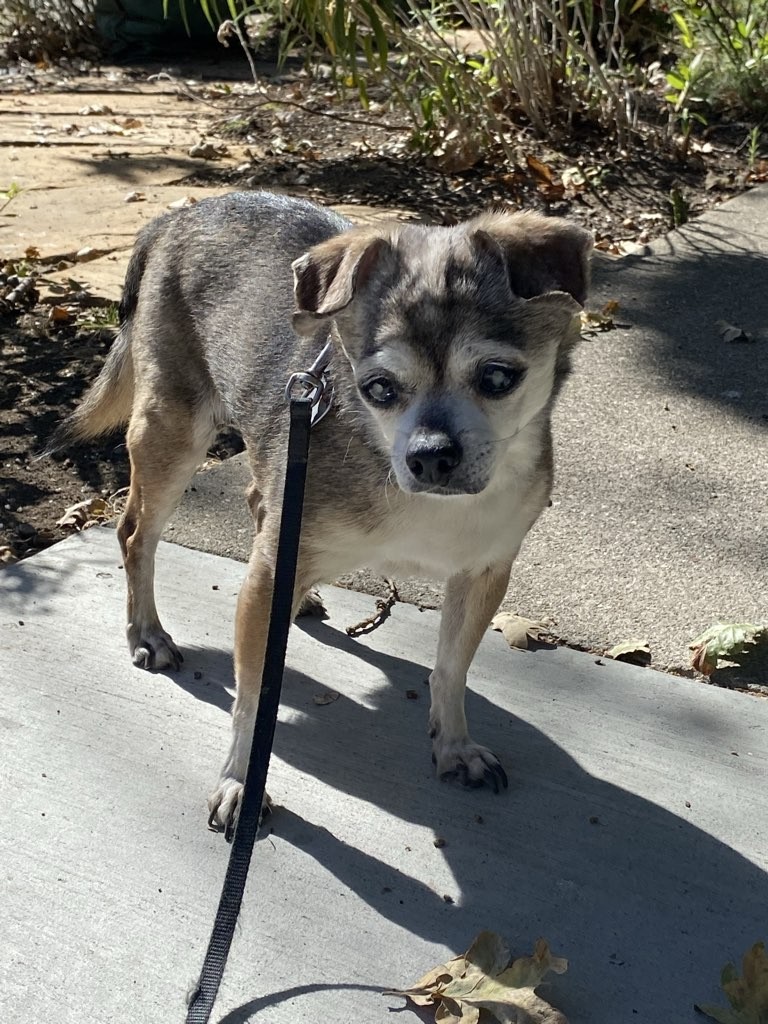
Can senior dogs still benefit from dog walking? Absolutely – and it can even contribute to their health and longevity.
Many senior dogs can continue to enjoy walks, provided the outing fits their health, comfort, and abilities. A good walk for an older dog may cover less ground, leave more time to sniff, and require closer attention to changes in movement or behavior. Your veterinarian can help determine what level of activity is appropriate for your dog; a professional walker can follow that plan and tell you what they observe.
For a busy household, that means your dog’s weekday routine can continue without expecting them to walk as they did years ago. The goal is to make room for the things they still enjoy.
What does senior dog walking look like in practice?
Meet Sansa, a blind and deaf 13-year-old Chihuahua mix we care for at Simply The Best Pet Care. She has adapted to navigating the world without sight or hearing, and she still gets to explore on her walks. Our job with senior dog walking is to pay attention to the things she cannot see: a large branch in her path, an unusual bump in the pavement, or a dip in the sidewalk.
Sansa sets the pace. We give her plenty of time to sniff and do not treat distance as the measure of a successful walk. Sometimes she wants to keep going; other moments are for taking in the smells around her. Her outings are shaped around what she enjoys in her golden years.
Her greeting matters, too. Sansa sometimes barks without an obvious trigger, and occasionally we arrive to find her barking at a wall. We approach calmly, comfort her, and give her time to smell us so she can settle and recognize who is there. We follow her established care routine while staying alert to anything that seems different from her usual behavior.
How should a walk change as a dog ages?
There is no single walking distance or pace that fits every senior dog. An older dog may still be eager for a substantial outing, while another may prefer a shorter, slower walk with frequent sniffing breaks. Age, fitness, mobility, medical history, and veterinary instructions all matter, especially with senior dog walking.
The American Kennel Club advises watching senior dogs for signs of pain or fatigue, including limping, stopping, or having trouble with curbs. A walker who sees a meaningful change should respond to the dog in front of them, communicate with the owner, and follow the household’s care instructions. A dog walker’s observations can be useful to the family and veterinarian, but the walker should not diagnose the cause.
Private walks make it possible to adjust pace and route for one dog. For Sansa, that means letting her investigate a scent without another dog urging her along – and watching the ground ahead while she does it.
Can a blind or deaf senior dog still enjoy walks?
Sensory loss does not automatically end a dog’s outdoor routine. It does change what their walker must notice and how they communicate. VCA Animal Hospitals explains that pets with disabilities may need practical changes to their daily care, and that deaf dogs need protection from traffic and other hazards they cannot hear.
With Sansa, senior dog walking means we stay attentive to obstacles and give her time to use her sense of smell. We also avoid assuming that she knows we have arrived simply because we are nearby. Her established greeting gives her a chance to orient herself before we begin the visit.
A dog with vision or hearing loss may have a very different routine from Sansa’s. The owner should show the team how that particular dog prefers to be approached, guided, and handled.
What if an older dog seems confused or behaves differently?
Tell your walker what is normal for your dog and what changes you want reported. Sansa’s occasional barking is something we know about, so we can respond calmly. A new or worsening pattern would be important information to share with her family when hiring senior dog walking services.
The American Veterinary Medical Association notes that disorientation and behavior changes in senior pets can have several causes, and recommends discussing concerning changes with a veterinarian. A dog walker can describe what happened – when, where, and how the dog responded – without labeling the behavior or trying to treat it.
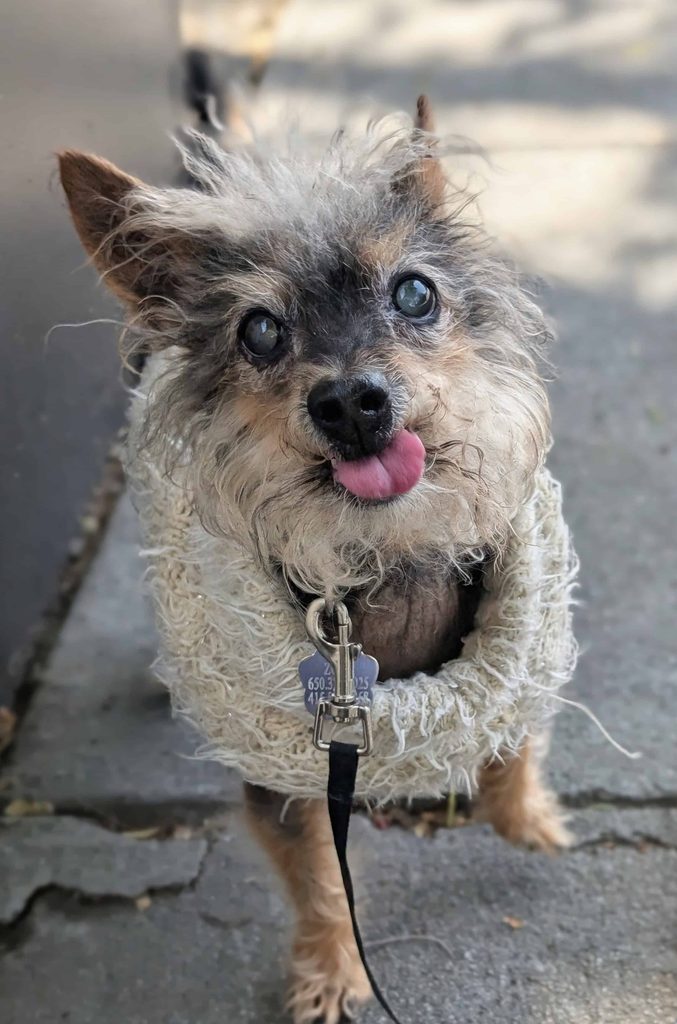
What should you tell a walker about your senior dog?
A few details make individualized senior dog walking care much easier:
- Their usual pace, preferred routes, and favorite places to sniff
- Any obstacles, surfaces, stairs, or curbs that are difficult for them
- How they prefer to be greeted and touched, especially if their sight or hearing has changed
- Which behaviors are typical for them and which changes should prompt a call
- Your veterinarian’s guidance on activity and any instructions the team should follow
At STB, our private weekday dog walks allow the team to follow a documented routine while paying attention to how your dog feels that day. Our guide to preparing your dog and home for a new walker explains how to share those details before visits begin. We serve recurring dog-walking households in Redwood City and nearby Peninsula communities.
Senior dog walking FAQs
Is my dog too old for a dog walker?
Age alone does not answer that question. Senior dog walking can be a great option for many older pups, and it can help their overall health and longevity. Ask your veterinarian what activity is appropriate for your dog, then share that guidance with your walker so visits can be planned around their needs.
How long should a senior dog’s walk be?
There is no universal length. It depends on the dog’s health, mobility, comfort, and veterinary guidance. A worthwhile outing can include a slower pace and plenty of time to sniff. We are happy to discuss options with you during your complimentary meet and greet!
Can a blind or deaf dog go on a neighborhood walk?
Many can, with care tailored to the individual dog. Their walker needs to understand how to approach them, communicate with them, and watch for hazards they may not detect.
What happens if my walker notices a change in my dog?
The walker should document what they observed, adjust the visit as appropriate within their role, and contact you when a change needs prompt attention. We take pride in this at STB! Your veterinarian is the right person to assess a health or behavior concern.
If your dog’s walks are changing with age, schedule a complimentary meet and greet. We can learn what they enjoy, review their routine and care instructions, and discuss whether STB’s private weekday walks are the right fit.

Caroline Mameesh is the founder of Simply The Best Pet Care and has provided professional pet care on the San Francisco Peninsula since 2014. She leads STB’s small team of vetted, trained W-2 employees and specializes in private dog walking, in-home pet sitting, pet-care safety, and reliable care systems. Simply The Best Pet Care is insured and bonded, a member of Pet Sitters International, and Caroline is a dedicated student of DogCo Launch. She is committed to raising the bar for pet care. When she isn’t out with pets or working to make Simply The Best even better for her clients, she likes to put her knowledge and years of experience down on paper so she can share it with pet parents more easily. That’s why this blog was born!